

Introduction
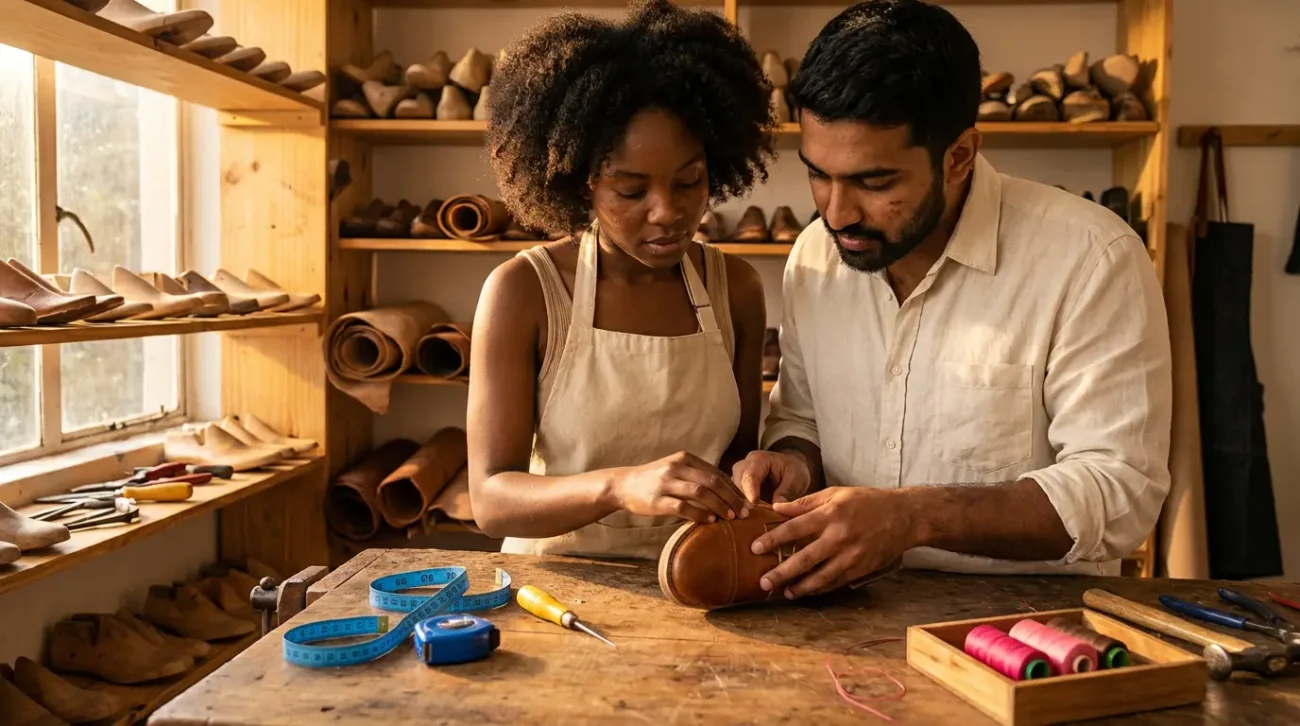
Handmade leather shoes go through a long journey before they reach you — from choosing the leather to the final finish.
But the most important stage that guarantees you high quality is the shoe inspection before it leaves the craftsman's workshop.
True craftsmen don't hand over a single pair of shoes before it's carefully inspected from every angle, to make sure it's comfortable, durable, and ready for daily use.
In this article, we'll take a detailed look at How Craftsmen Check the Quality of Every Pair of Women's Leather Shoes.
1. Checking leather quality first
Before starting shoe production, the craftsman inspects the leather itself.
What is he looking for?
✔️ That the leather is free of defects
✔️ That there are no strong lines or wrinkles
✔️ Suitable leather thickness
✔️ Smoothness of the surface
✔️ The natural leather smell
Why does this matter?
Poor-quality leather, no matter how beautiful the design… the shoe won't hold up.
2. Checking cutting strength and precision
After cutting the leather, the craftsman checks:
- Are the edges straight?
- Is the cutting even?
- Was the leather cut without tears?
- Are the pieces identical in shape?
This stage is essential to ensure the shoe is assembled uniformly.
3. Stretching the leather over the last… then the inspection
Shaping the leather over the last is a basic step.

What does the craftsman check after this?
✔️ Did the leather shape without wrinkles?
✔️ Is the stretch even on both sides?
✔️ Is the front of the shoe smooth?
✔️ Is the back of the shoe stable?
If the leather starts to crack or loosen → it's rejected.
4. Checking the hand stitching
Stitching is the most important sign of quality in handmade shoes.
The craftsman checks:
✔️ Stitch uniformity
✔️ Thread strength
✔️ That there are no loose threads sticking out
✔️ Even spacing between stitches
✔️ Leather stability after stitching
Weak stitching = a shoe that falls apart quickly.
5. Checking the bottom sole
The sole is a crucial part of comfort and durability.
Checked:
- Sole stability under pressure
- Bonding strength
- The shoe's balance on the ground
- Sole flexibility when bent
- Slip resistance
6. Checking the heel and its stability
Craftsmen inspect the heel precisely.
They verify:
✔️ That the heel is stable and doesn't shift
✔️ That the foot is balanced while standing
✔️ That the strength of the nails or stitching is sound
✔️ That there's no tilt that harms the foot
An unstable heel is rejected immediately because it causes injuries.
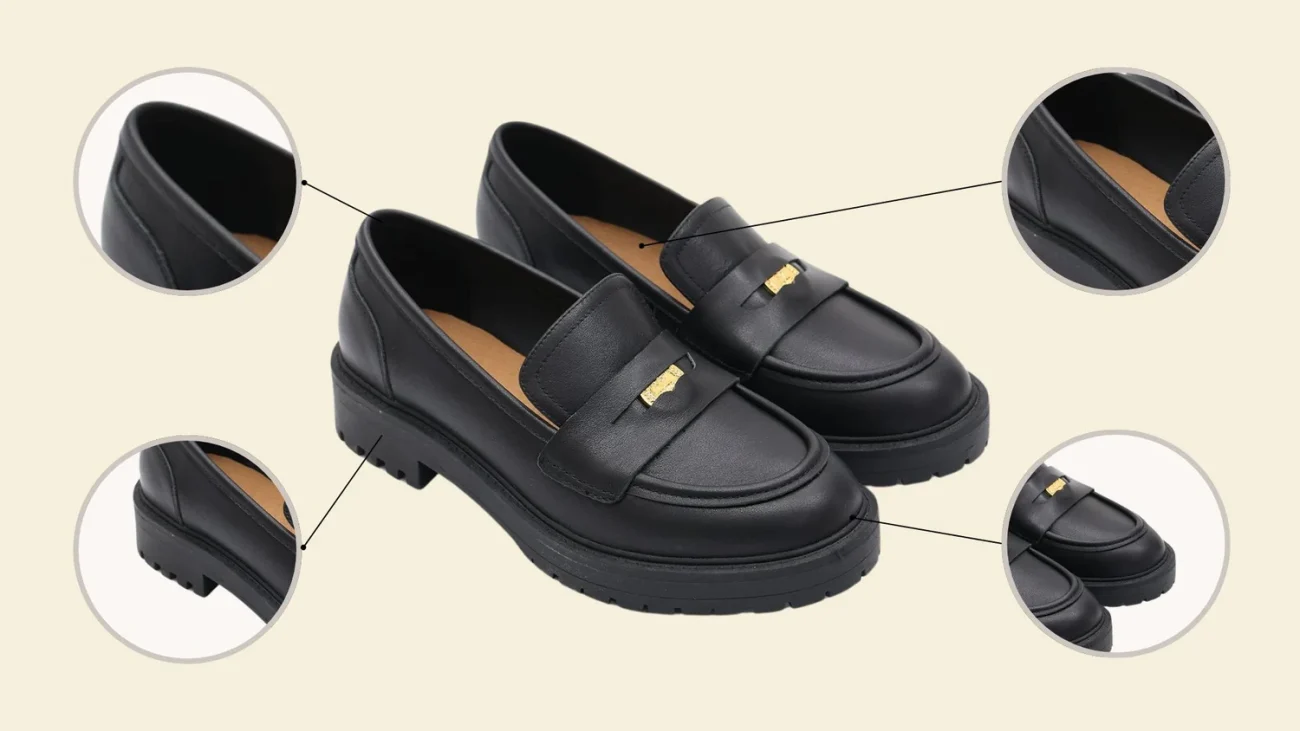
7. Checking the insole (comfort)
The craftsman presses on the insole and checks it by hand.
He looks for:
✔️ Lining softness
✔️ That there are no bumps
✔️ A natural curve for the foot's arch
✔️ Sufficient padding layer
✔️ Adequate ventilation
Your comfort starts from inside the shoe, which is why this inspection is so important.
8. Checking the shoe's full flexibility
The shoe bends at the toe area.
The inspection reveals:
✔️ Is the shoe flexible enough?
✔️ Does the leather move without creaking or cracking?
✔️ Does the sole return to its shape?
If the shoe is too stiff → it's not suitable for long walks.
9. A real walking test
The craftsman himself tests the shoe after assembly.
He checks:
✔️ The foot sliding inside the shoe
✔️ Heel pressure
✔️ The foot's shape while moving
✔️ The shoe's grip on the ground
✔️ The shoe's weight and balance
Any small discomfort leads to the shoe being fixed before it's delivered.
10. The final finish inspection
The last stage is polishing and finishing.
It's verified that:
✔️ Cleanliness of the leather
✔️ Smoothness of the edges
✔️ Color uniformity
✔️ Natural shine
✔️ No glue marks
Then the workshop's or brand's stamp is imprinted as a guarantee of quality.
In Summary
Craftsmen inspect every pair of leather shoes by hand, from A’ to Z’:
✔️ Leather inspection
✔️ Cutting precision
✔️ Shaping over the last
✔️ Careful stitching
✔️ Sole and heel inspection
✔️ Shoe flexibility
✔️ Walking test
✔️ Professional final finish
And the result?
A comfortable, durable shoe, carefully made to last for years.





Leave a comment